
Structuring for Construction Businesses
Most construction businesses settle their structure at one point in time, and then the business keeps changing around it: more jobs at once, new activities like development, plant and property acquired along the way, partners and key people joining. Whether a structure was set up years ago or reviewed more recently, the question worth asking is the same. Does it still stack up for what the business does now, across the tax it pays, the risk it carries, and the way ownership is held?
Structure decides three things. It decides how profits are taxed as they move through the group, what is exposed if a claim is made against the entity holding the licence, and how easily ownership can change hands when someone comes in or goes out. Getting those three right is a different exercise from setting up a company and getting on with the work.
This masterclass works through the structuring decisions a building or trade group faces as it grows, and the ownership arrangements that sit alongside them. The full session is now available to watch on demand.
Why structure carries more weight in construction
Construction carries more commercial risk than most industries. Defect liability runs for years after practical completion, personal guarantees sit behind supplier and bank facilities, payment chains are long, and the entity holding the licence carries obligations that a generic trading company does not. The session opens with what that risk profile means for how a group should be arranged, and what separation between entities does when a claim is made.
The entity options, and what each is suited to
The session sets out the options plainly: trading companies, holding companies, discretionary trusts, unit trusts, and companies used to retain profit. Rather than treating one arrangement as correct, entities are matched to activities, because building for clients, developing property, holding land, owning plant and employing staff are different exercises with different risk and tax consequences. A group running several activities through a structure built for one has the most to gain from this part of the session.
How profits move through the group
The session walks through the path profits take from the trading entity through the group, and how they are taxed at each step. That includes the decision to retain profit for working capital rather than distribute it, which matters in an industry where working capital funds the next job. The path profits take is also where the tax planning available to a larger group tends to sit, once the structure is arranged to support it.
Licensing, and what it rules out
QBCC licensing and minimum financial requirements limit the structures available to a licensed builder in Queensland, which is why the licensed entity is rarely a trust here. Victoria differs, and the session covers that difference rather than flattening it into one national answer.
What restructuring involves
Where a change is warranted, the session sets out plainly what making that change involves. Rollover relief covers income tax and CGT. Stamp duty is a state tax the Commonwealth cannot switch off, and the duty exposure can exceed the tax a restructure was meant to save. The session shows you how to work out whether a change is worth making, and how to time it.
Shareholders, directors and boards
The second half of the recording moves to ownership, covering who sits where, what directors are responsible for as distinct from shareholders, and the point at which a formal board earns its place in a business this size.
Protecting business partners from each other
Partnership arrangements are easiest to put in place while everyone is getting along, and hardest once they aren’t. The session works through the conversations to have early and the scenarios a shareholder agreement needs to cater for: one party wanting out, disagreement with no clear tiebreaker, death or disability, relationship breakdown, how the business is valued, and how a buyout is funded. Family arrangements get their own treatment, because succession where the next generation is in the business raises questions that an arm’s length partnership does not.
Bringing key staff into ownership
Key people who have helped build the business often want a stake in it. The session covers the ways of giving a key person a stake, what each option does to control, and how to structure the arrangement so it still works if that person leaves.
What you’ll take away from the session
- You’ll come away with a clear view of whether your current structure still fits the scale and the range of what the business does now.
- You’ll understand which activities belong in their own entity, and why.
- You’ll see the tax planning a group of your size can use once the structure supports it.
- You’ll have the questions to put to your accountant and your lawyer, and the answers you should expect.
- You’ll have a realistic sense of what restructuring involves, including the costs that come with it.
Who it’s for
Owners of building and trade businesses who want to know whether their current structure still fits what the business does, particularly those running more than one activity, sharing ownership with a business partner or family member, or considering bringing key staff into equity.
If you’d prefer to work through your own structure one-on-one, get in touch to book a consultation
*This session is general information for construction business owners. It is not advice on your own circumstances.
Recommended Reading
Does Your Structure Still Fit the Business You Run Now?
A group structure settled when the business was smaller and doing one thing will not automatically suit a group running several jobs, holding land, carrying plant, and sharing ownership with a partner or a family member. This article works through what a structure decides, where QBCC and the incoming Victorian requirements constrain the options, what a restructure costs once stamp duty is counted, and the ownership terms that sit alongside it.


Insights and Resources

Events, Webinar
20 October 2026Building a Stronger Sales Pipeline
Successive interest rate rises and weaker consumer confidence have reduced demand for new ...
Read more
Events, Webinar
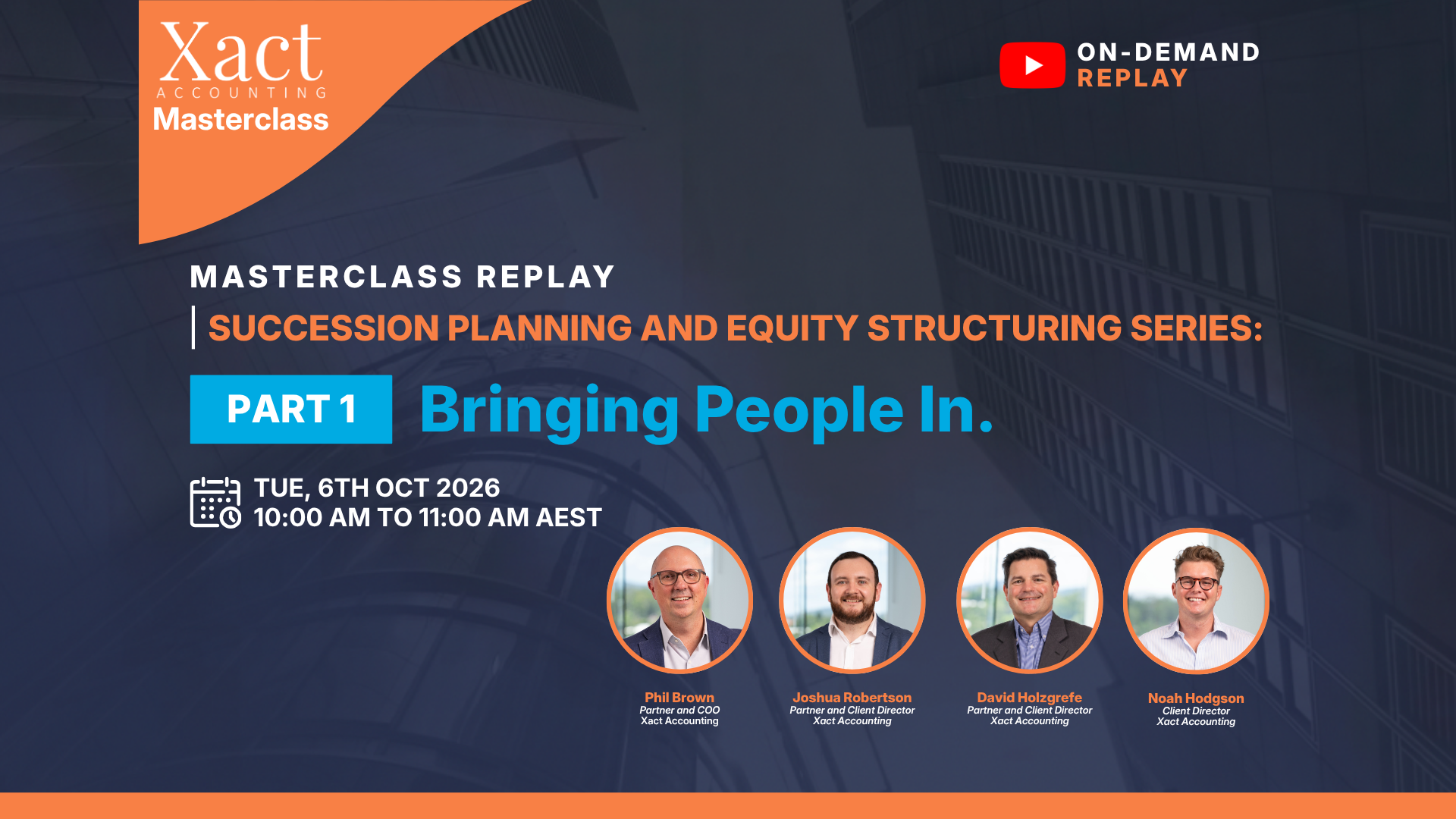
6 October 2026Succession Planning and Equity Structuring Series (Part 1): Bringing People In
Construction business owners bring another partner into the business for a range of reason...
Read more
Events, Webinar
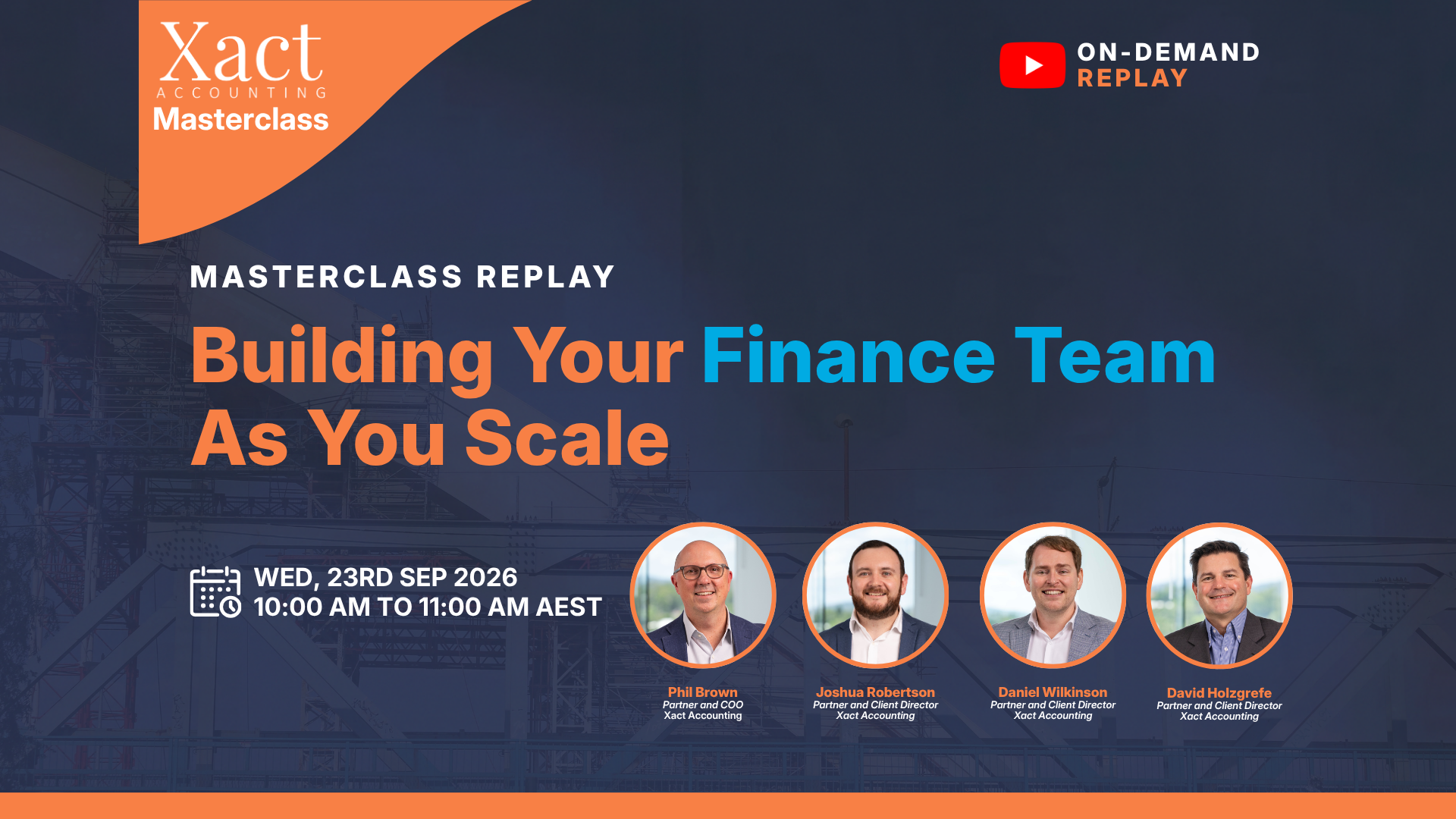
23 September 2026Building Your Finance Team as You Scale
Behind every well-run construction business there is a strong commercial accounting backbo...
Read more