
Building Your Finance Team as You Scale
Behind every well-run construction business there is a strong commercial accounting backbone: reporting you can trust, accurate margin analysis, a reliable view of the forward position, and a commercially minded accountant supporting the business owner on decisions that shape the business. The harder questions are what it costs to build this capacity in your team, and when to start.
What you need from that backbone changes as you grow. The finance function that suits a business winning its first few large contracts is very different from the one running behind a builder past $100 million in revenue. This masterclass worked through that journey stage by stage, so you can see where your business sits now and what the next stage asks of you. The full recording is available to watch now.
The maturity journey we walked through
We covered four stages, from the foundations a young business needs through to what a mature finance team looks like at the top end.
- Startup businesses build good disciplines early, with reliable bookkeeping and cost tracking at a job-by-job level, so the numbers you work from can be trusted.
- Growth is the point where basic bookkeeping stops being enough and financial control starts to matter, through reporting you can rely on and clear visibility of performance job by job.
- Scaling brings in CFO-level thinking, where the finance function is used to shape performance rather than only record it.
- Established businesses past $100 million run a well-oiled finance team, and we showed how those roles fit together.
What we covered along the way
- We set out the finance roles a business needs at each stage, and the sequence they tend to come in.
- We worked through when each role earns its place, so a hire is not made ahead of the need and a gap is not left open too long.
- We went through what it costs to build a finance team, and where growing builders commonly start.
- We weighed an internal team against outsourcing, and onshore against offshore, with the trade-offs of each set out honestly.
- We covered what to look for when hiring, particularly where the owner does not have a strong finance background.
- We explained where tax fits, and why your tax accountant and your commercial accountant need to be working together.
What the replay gives you
- You will finish with a clear view of where your business sits on the journey, and what the next stage asks of you.
- You will have a sense of what to build next, and what it is likely to cost.
- You will be able to make a finance hire, or an outsourcing decision, with a clear view of the options.
Yours to take away
Two resources from the masterclass are available to download alongside the replay.
- The position descriptions cover each key finance role, from bookkeeper through to CFO.
- The salary guide covers each of those roles, so you can benchmark what they cost.
If you would prefer a one-on-one session, get in touch to book a consultation.

Recommended Reading
Building Finance Capability as Your Construction Business Grows
Most construction businesses start with the owner doing the books at night, and finance is usually the first function where that stops working. This article maps the sequence the roles tend to arrive in, bookkeeper to financial controller to CFO, and what each one solves that the last cannot. It also works through the harder half of the decision: whether to hire or outsource at each level, and why a fractional arrangement often makes more sense for a business between $5M and $20M than a $300,000 salary.
Ready to work out what your finance function needs next?
Book a free consultation and we’ll look at where your finance function sits now and what to build next. Or if you missed it, watch the replay of our Finance Team Masterclass, where we walk through the roles, the costs and the build-versus-outsource decision stage by stage.


Insights and Resources
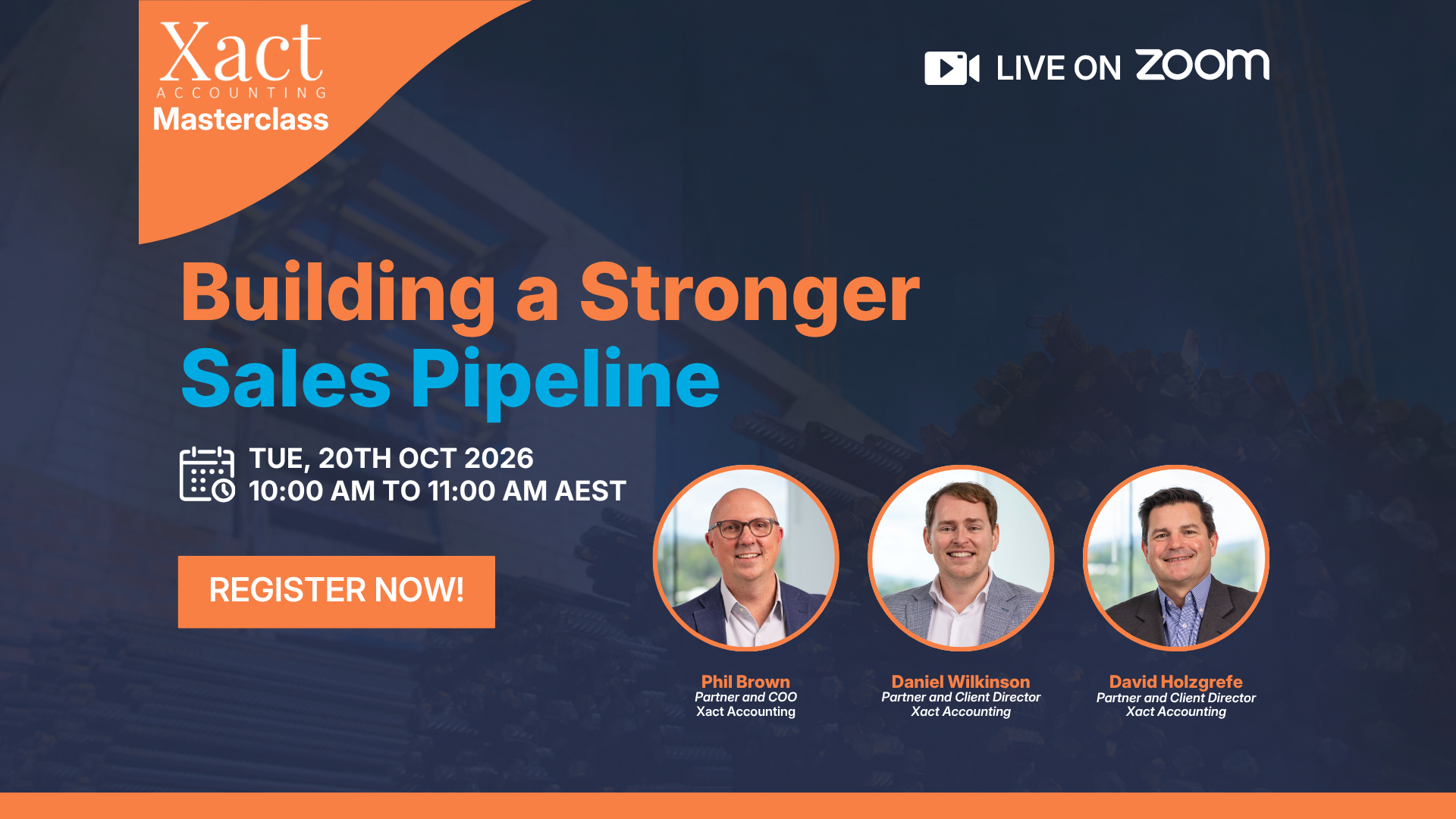
Events, Webinar
20 October 2026Building a Stronger Sales Pipeline
Successive interest rate rises and weaker consumer confidence have reduced demand for new ...
Read more
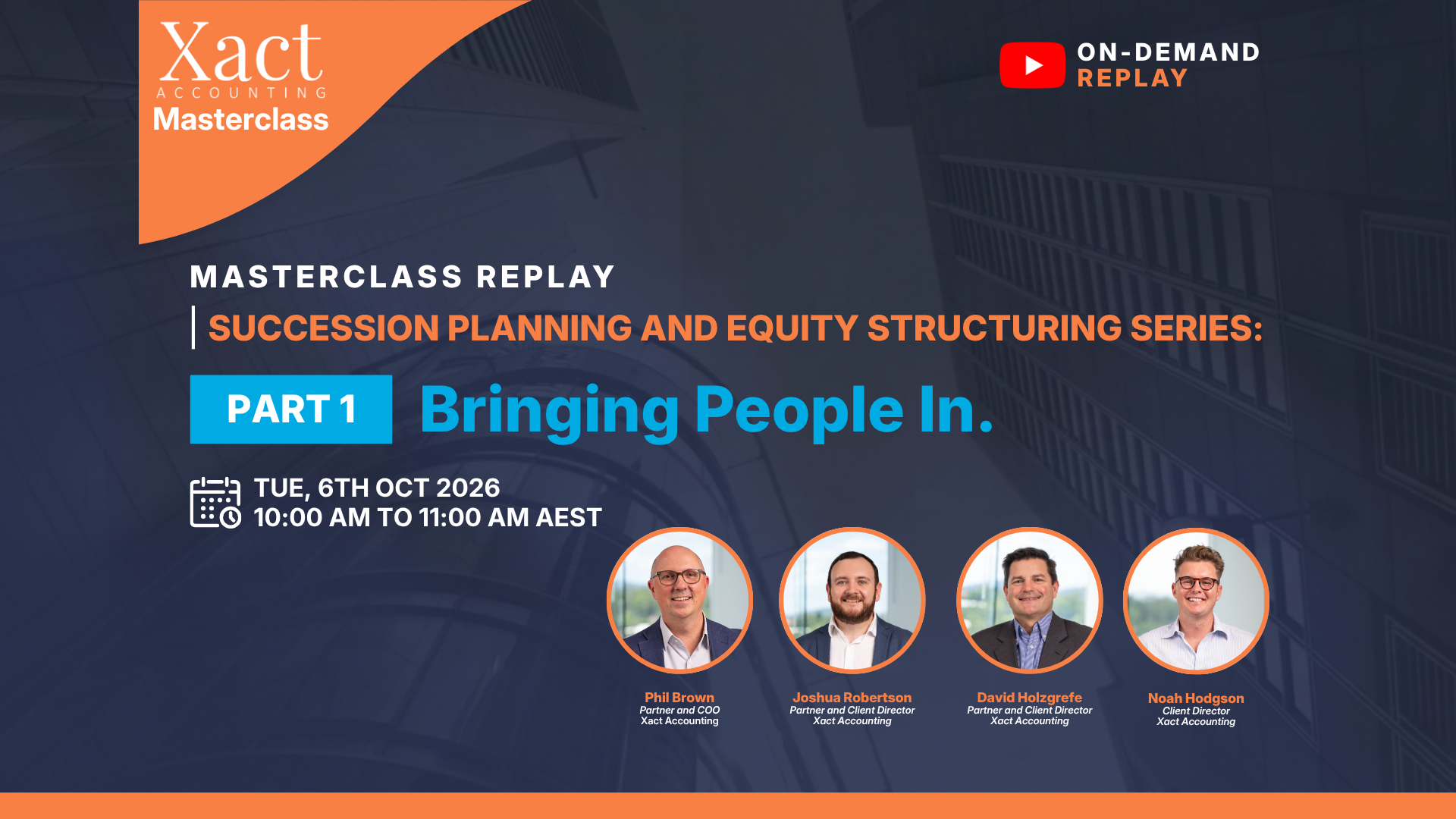
Events, Webinar
6 October 2026Succession Planning and Equity Structuring Series (Part 1): Bringing People In
Construction business owners bring another partner into the business for a range of reason...
Read more
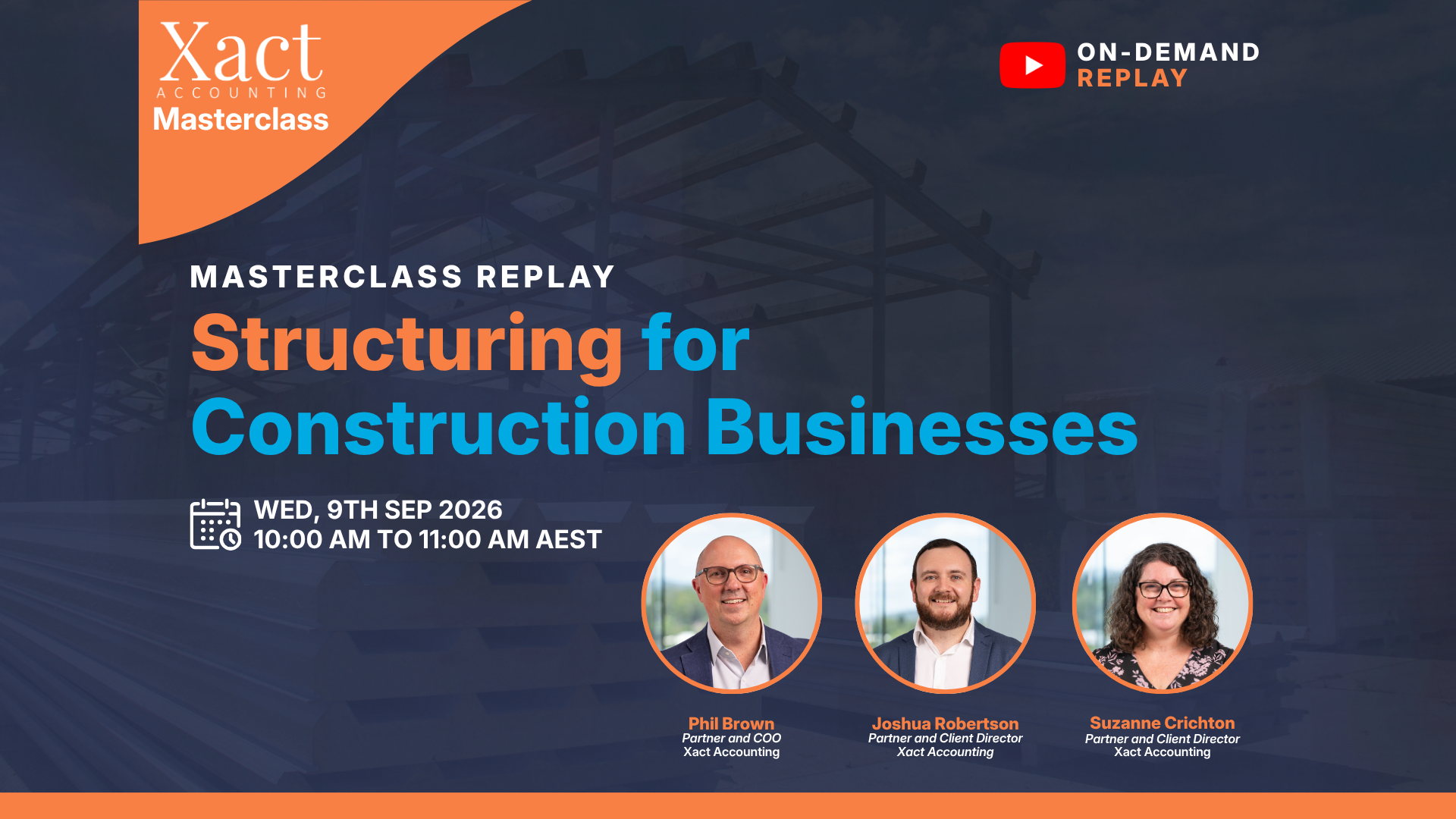
Events, Webinar
9 September 2026Structuring for Construction Businesses
Most construction businesses settle their structure at one point in time, and then the bus...
Read more